
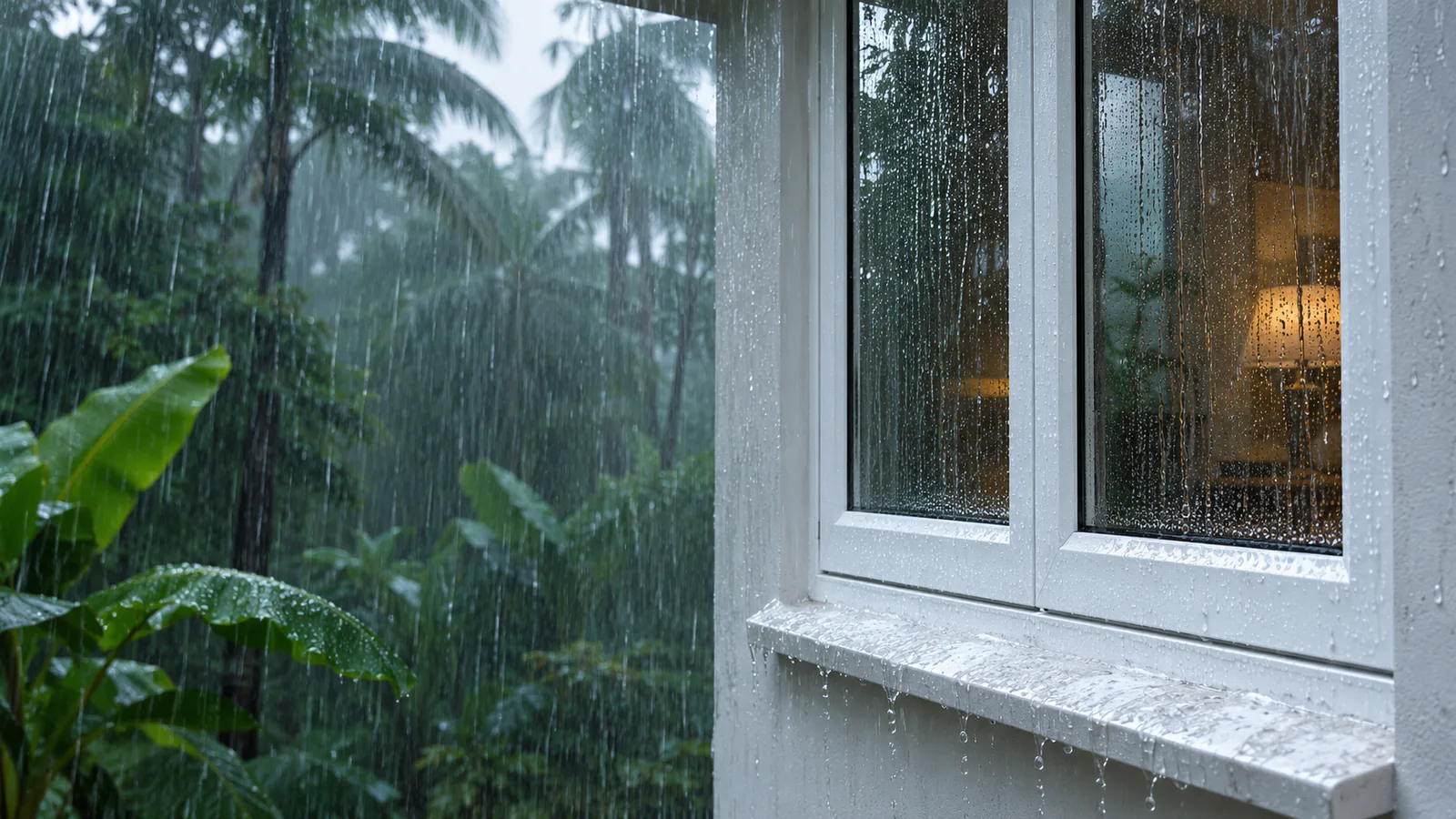
Monsoon rain streaming down a white uPVC window with a lush Kerala garden and palms behind

Why uPVC

uPVC vs aluminium windows, and wood: an honest guide for Kerala

An honest lookat the frame.

uPVC, aluminium or wood? Each has its strengths. Here is how they compare in Kerala's rain, heat and salt air.

Three materials

What is uPVC, and why Kerala homes choose it.

uPVC stands for unplasticised polyvinyl chloride: a rigid, weather-resistant material made into multi-chamber window profiles and reinforced with steel. Choosing between uPVC vs aluminium windows, or wood, comes down to your climate, your elevation and how much upkeep you will accept. In Kerala, with about 3,000 mm of rain a year and 590 km of salty coastline, those questions matter more than most places.

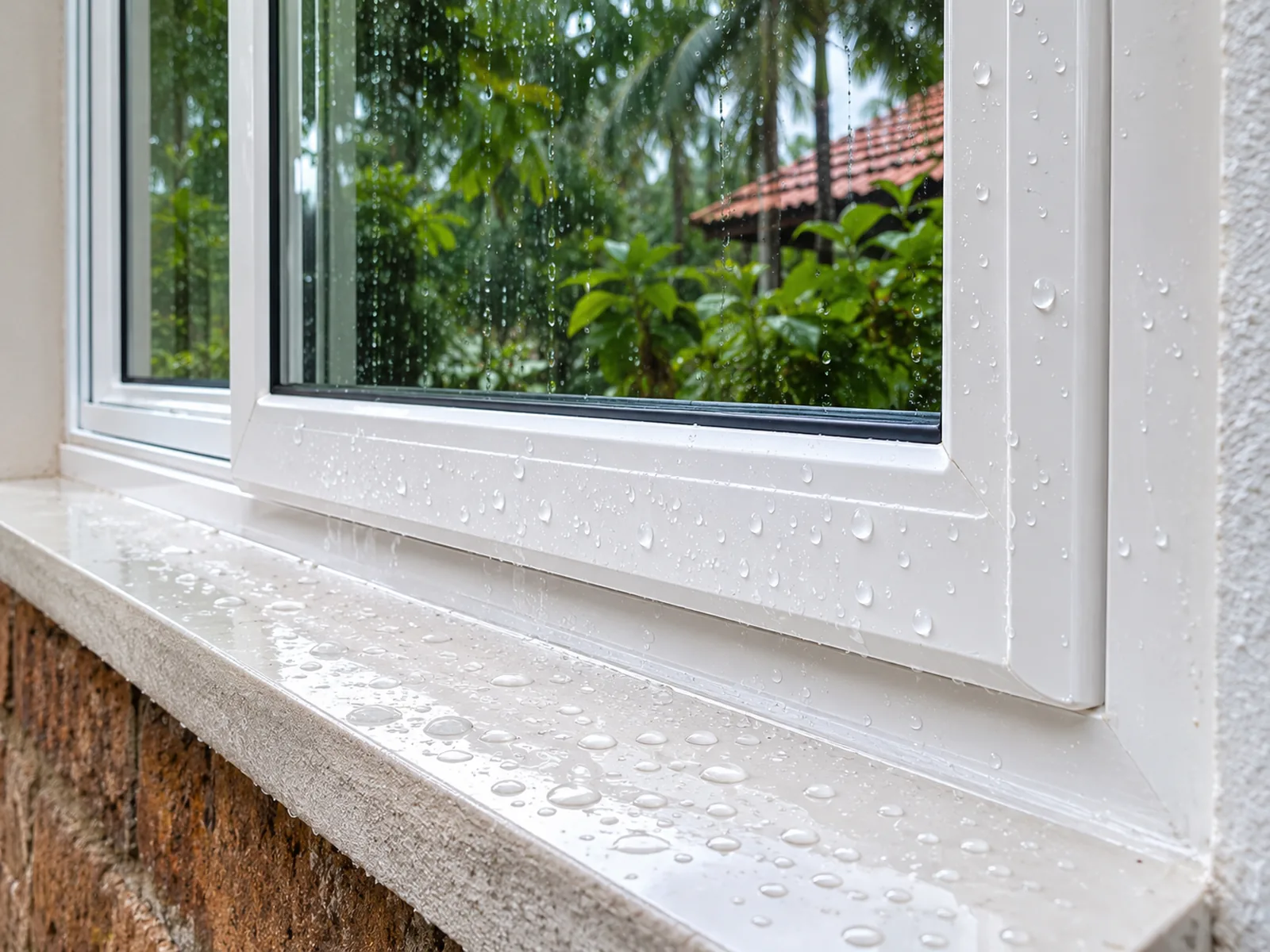
Clean white uPVC window frame and sill after monsoon rain, water beading on the smooth surface

uPVC

Strengths

  • Welded corners and double gaskets give a continuous seal against rain and dust
  • Multi-chamber frames insulate against heat and help reduce outside noise
  • Does not rust, rot or attract termites
  • Never needs painting; an occasional wipe is enough
  • White, wood-grain, grey and black finishes

Watch-outs

  • Frames are wider than the slimmest aluminium systems
  • Very large spans need steel reinforcement and careful design
  • Quality varies widely between makers and fitters
  • The finish cannot simply be repainted to a new colour later
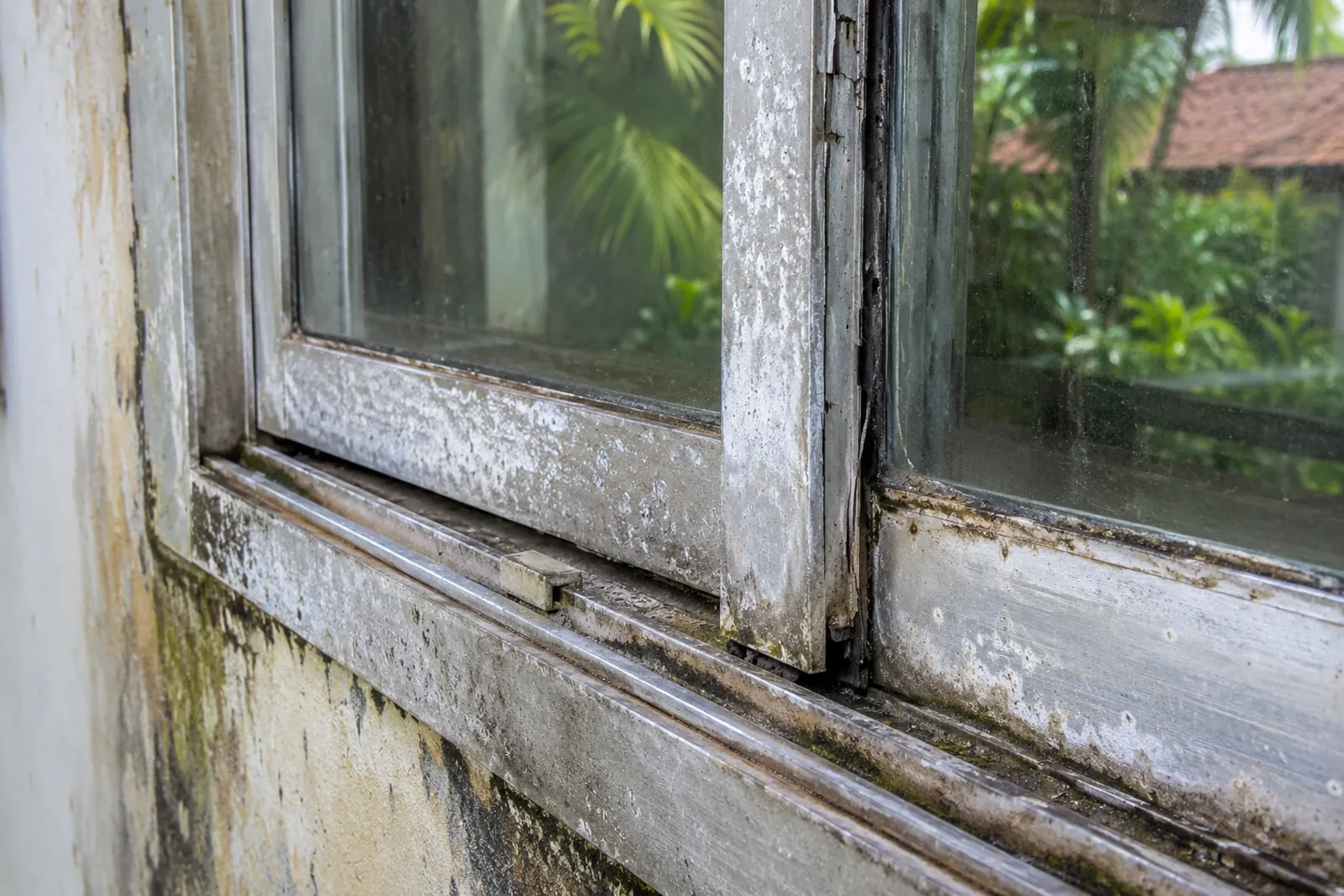
Old aluminium sliding window with white oxidation and grime in the track

Aluminium

Strengths

  • The slimmest sightlines of the three
  • Suits very large glass panels and wide spans
  • Strong, durable and recyclable

Watch-outs

  • Conducts heat unless a thermally broken system is used
  • Sliding systems often seal less tightly than welded uPVC
  • Poorly specified coatings can corrode or chalk in coastal air
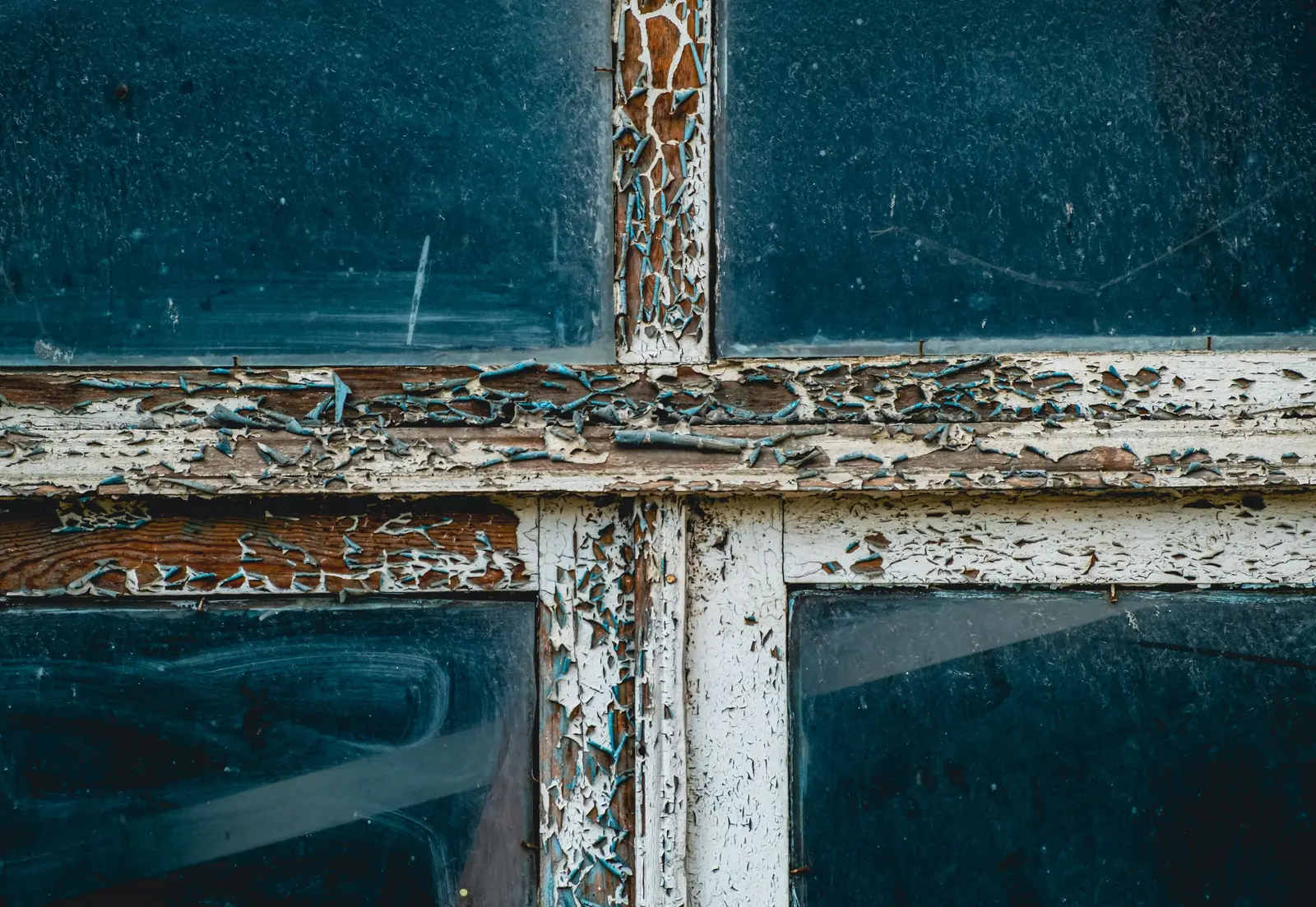
Close-up of an old wooden window frame with cracked, peeling paint and weathered timber

Wood

Strengths

  • Natural warmth and character that nothing else quite equals
  • Suits traditional Kerala and heritage homes
  • Can be repaired and refinished

Watch-outs

  • Vulnerable to termites in Kerala's climate
  • Swells, warps and sticks in monsoon humidity
  • Needs regular painting or polishing
  • Good seasoned timber is increasingly costly and scarce

An honest comparison

The same seven tests, side by side.

Indicative scores out of five for a coastal, monsoon home. The note under each row says what the score is based on.

Indicative scores out of 5, for South Indian conditions. uPVCAluminiumWood
Sealing against rain and dustWelded corners and double gaskets give uPVC a continuous seal. 5/5 3/5 2/5
Heat at the frameuPVC and wood insulate; bare aluminium conducts heat. 4/5 2/5 4/5
Noise reductionMulti-chamber frames with double glazing reduce outside noise. 4/5 3/5 3/5
Termites, rust and rotuPVC is untouched by termites, rust and rot. 5/5 4/5 1/5
Upkeep over the yearsNo painting, no polishing. An occasional wipe is enough. 5/5 4/5 1/5
Slimness of sightlinesAluminium can be slimmest; uPVC stays slim with steel reinforcement. 3/5 5/5 3/5
Natural characterNothing equals real wood; our wood-grain laminates come close. 3/5 2/5 5/5

Aluminium wins on slimness and wood on character, but for sealing, heat, termites and upkeep in Kerala, uPVC scores highest overall. That is why most of the homes we fit choose it.

For Kerala's climate

Benefits of uPVC windows in a Kerala home.

01

Sealed for the monsoon

Welded corners, double gaskets and hidden drainage keep wind-driven rain and dust on the outside.

02

Cooler rooms

Multi-chamber profiles and double glazing slow the afternoon heat, so rooms stay more comfortable.

03

Quieter rooms

With the right glass, uPVC windows reduce traffic and street noise noticeably. Quieter, not silent.

04

No termites, rust or rot

uPVC gives termites nothing to eat and salt air nothing to corrode. It does not swell in humidity.

05

No painting, ever

White uPVC is coloured right through, and laminated finishes need no polish. A wipe keeps it clean.

06

Secure by design

Steel reinforcement, multi-point locks and toughened or laminated glass make each window harder to force.

07

Made to last

Well made and well fitted, uPVC windows stay straight and smooth for many years, with an XX-year warranty.

Our honest verdict

Which material suits your home?

Villa in the monsoon belt

uPVC

Heavy rain, humidity and termites favour uPVC. Use casement windows on exposed walls and sliding doors to the sit-out.

Coastal home

uPVC with laminated or toughened glass

uPVC will not corrode in salt air. Specify steel-reinforced frames, multi-point locks and stronger glass on the sea-facing side.

City apartment

uPVC with double or acoustic glazing

For traffic noise and afternoon heat, uPVC with double-glazed or acoustic glass makes the biggest difference. Tilt and turn suits upper floors.

Heritage or tharavad home

uPVC in wood-grain, or restored timber

Keep and restore original carved timber where it matters. For new or replaced openings, wood-grain uPVC arches and French doors respect the character without the upkeep.

FAQs

uPVC, aluminium or wood, answered.

All FAQs

Which is better for Kerala, uPVC or aluminium windows?

For most Kerala homes, uPVC is the better all-round choice. Its welded, double-gasketed frames seal tightly against monsoon rain, it insulates against heat, and it does not corrode in coastal air. Aluminium has real advantages for very slim sightlines and very large glass walls. Many homes simply need well-sealed, low-maintenance windows, and that is where uPVC is strongest.

Are uPVC windows better than wooden windows?

In Kerala's climate, uPVC is usually more practical. Wooden windows can swell, warp and stick in monsoon humidity, they attract termites, and they need regular painting or polishing. uPVC avoids all of that. Wood still has a natural character nothing else matches, which is why many heritage homes keep their original timber. Our wood-grain uPVC finishes offer a similar look without the upkeep.

What are the disadvantages of uPVC windows?

uPVC frames are a little wider than the slimmest aluminium systems, so very minimal glass walls may suit aluminium better. Very large spans need steel reinforcement and careful design. The finish is chosen at the factory and cannot simply be repainted later. Quality also varies between makers, so the profile, reinforcement and installation matter as much as the material itself.

Is uPVC termite-proof?

Yes. Termites feed on cellulose in wood, and uPVC contains none, so they cannot damage uPVC frames. This is one of the main reasons Kerala homeowners replace wooden windows with uPVC. Termites can still affect nearby timber, such as wooden lintels or furniture, so treat the rest of the house as usual. The windows themselves will not be eaten.

Do uPVC windows reduce noise and heat?

Yes, they reduce both, though no window makes a room soundproof. Multi-chamber uPVC profiles insulate the frame, double gaskets close the gaps that let sound and hot air through, and double-glazed or acoustic glass makes the biggest difference to noise and heat through the glass. For a home on a busy road, we usually suggest acoustic or double-glazed units.

What is the difference between uPVC and WPC?

uPVC is rigid unplasticised PVC, made into hollow multi-chamber profiles and reinforced with steel, and it is mainly used for windows and glazed doors. WPC is wood-plastic composite, a mix of wood fibre and plastic usually used for solid door shutters and frames. For windows and glazed doors that must seal against rain, uPVC is the more usual choice.

What is uPVC, and what does it stand for?

uPVC stands for unplasticised polyvinyl chloride. It is a rigid, weather-resistant form of PVC, without the softeners used in flexible plastics. For windows and doors it is extruded into hollow multi-chamber profiles, reinforced inside with galvanised steel and welded at the corners. The result is a frame that insulates, seals tightly and does not rust, rot or need painting.

What is the difference between uPVC and PVC?

Ordinary PVC often contains plasticisers that make it flexible, as in cables, hoses or some pipes. uPVC is unplasticised, so it stays rigid and stable, which is what a window frame needs. uPVC window profiles are also made with additives that help them withstand sunlight. For windows and doors, you should always ask for uPVC profiles with steel reinforcement.

Begin

Still deciding? Ask us.

Our team will visit, look at your elevations and tell you honestly which material and window type suits each opening.

Call
[to be confirmed]
WhatsApp
[to be confirmed]
Email
[to be confirmed]
Factory & showroom
[to be confirmed], Aluva, Ernakulam, Kerala